From pre-seed to Series A, the startup journey is unlike any other. These audiobooks cover the unique challenges founders face — finding product-market fit, pitching investors, managing co-founder relationships, and staying sane through it all. Listen to the people who've done it and survived to tell the story.
Steve Blank, the godfather of the Lean Startup movement, provides the most detailed operational guide for startup founders ever published. Customer Development — Blank's methodology for testing business assumptions before building product — is now taught in universities worldwide. This audiobook walks founders through every stage of building a startup: from talking to your first customer to building a sales team. Practical, rigorous, and completely actionable.
Founders often waste months building the wrong thing. Blank's customer development methodology teaches you to validate before you build.
The definitive guide to understanding venture capital term sheets, written by a veteran VC who wants founders to actually understand what they're signing. Feld demystifies pre-money valuation, liquidation preferences, anti-dilution provisions, and board composition in plain English. Every founder who has ever signed a VC term sheet without understanding half the clauses needs this audiobook before they raise their next round.
Most founders get taken advantage of in fundraising simply because they don't understand the documents. This fixes that completely.
Moz founder Rand Fishkin gives the most painfully honest account of startup life you'll find anywhere. Rather than a triumph narrative, Fishkin shares how raising VC money nearly destroyed his company and his mental health, why conventional startup advice is often wrong, and what he would do completely differently. If you're considering raising venture funding, this audiobook is essential listening before you take any outside money.
Fishkin challenges the VC-funded startup as the default path and gives founders permission to consider alternatives — like bootstrapping or slower growth.
Rob Fitzpatrick solves one of the most common founder mistakes: asking customers if they like your idea and getting polite lies in response. The Mom Test provides a simple framework for having customer conversations that reveal genuine insights rather than false validation. The core principle: talk about their life, not your idea. Ask about the past, not the hypothetical future. Short, dense, and immediately applicable.
Founders waste enormous amounts of time building products based on customer feedback that turned out to be empty politeness. The Mom Test prevents this.
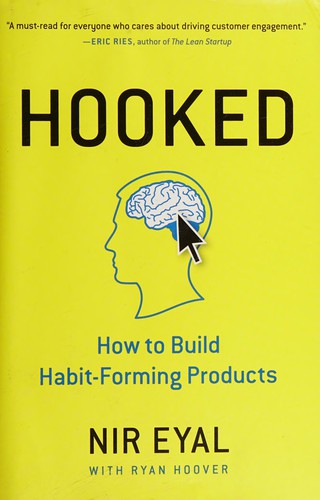
Nir Eyal's Hook Model — Trigger, Action, Variable Reward, Investment — explains how products like Instagram, TikTok, and Slack build habits that users return to without conscious thought. Founders building consumer products, apps, or SaaS tools will find this framework invaluable for designing engagement that compounds over time rather than decaying after launch.
Founders building digital products need to understand habit formation at a deep level to build retention into their product from day one.
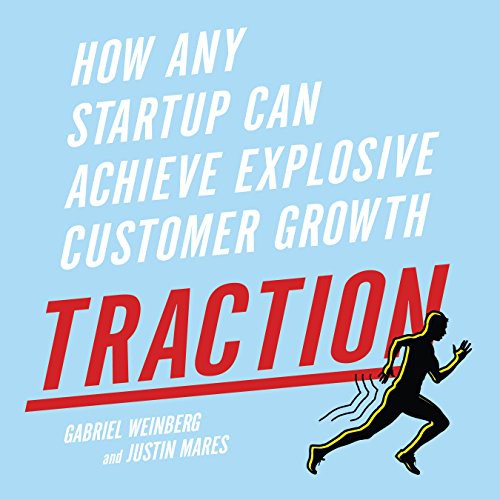
DuckDuckGo founder Gabriel Weinberg presents 19 traction channels — from content marketing and SEO to viral marketing and trade shows — and gives founders a systematic framework (the Bullseye Framework) for finding the one or two channels that will drive their growth. Most startups fail not because of bad product but because of poor distribution. Traction fixes the distribution problem.
Most founders obsess over product and ignore distribution. Traction flips the script and shows that finding your growth channel is as important as building the product.
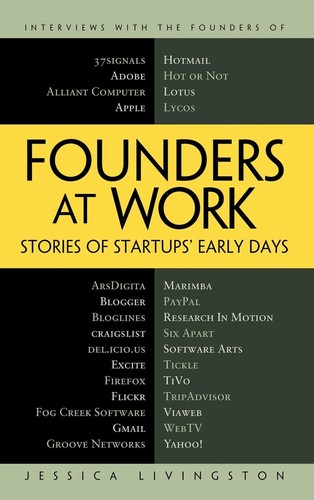
Y Combinator co-founder Jessica Livingston interviews the founders of Apple, Hotmail, TripAdvisor, PayPal, and 30 other iconic companies about their earliest days — before they were successful. The stories are uniformly messy, chaotic, and full of near-death moments. This audiobook is part history, part therapy for founders who feel like everything is falling apart — because it always does, even for the greats.
Hearing the messy, human reality of how great companies actually started normalizes the chaos that every founder experiences and provides direct tactical inspiration.
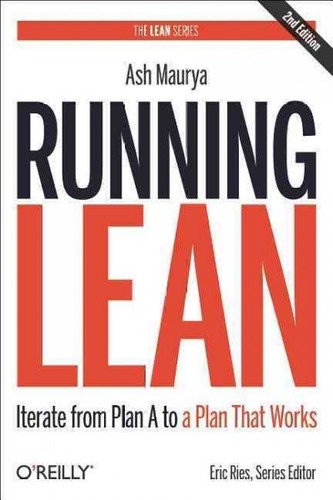
Ash Maurya builds on the Lean Startup methodology with his Lean Canvas — a one-page business model template that replaces the traditional business plan. Maurya walks founders through a systematic process of identifying their riskiest assumptions and testing them in the right order. Particularly strong on how to move from problem interviews to solution interviews to MVP to pricing experiments.
Founders who struggle to articulate their business model or know where to start testing will find the Lean Canvas immediately clarifying.
 Audiobooks Arcade